

From the perspective of Science, Technology and Society (STS), this paper analyzes the "standardization hegemony" embedded in mass-produced industrial products. The development and testing of most tools and equipment take the physical conditions and usage habits of adult males as the sole "standard
body". Seemingly universal standardized products are not neutral and objective; instead, they hide implicit biases. Such products have long ignored the practical needs of marginalized groups including left-handed people, those with small hands, people with weak physical strength, and women, subjecting
minorities to persistent inconvenience, physical strain and even life-threatening risks.
I. Real World Applications
1. Exclusion of Groups Embedded in Daily Physical Tools
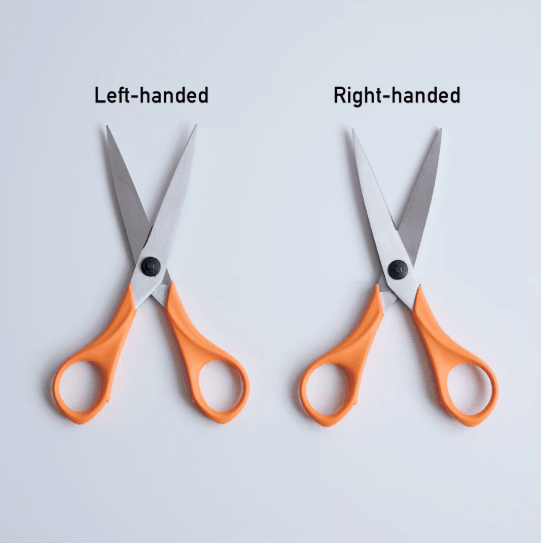
Left-handed populations: Over 90% of scissors on the market are designed for right-handed
users. Left-handed people suffer forced wrist flexion when using them, which easily causes muscle strain and carpal tunnel syndrome. Left-handed scissors remain a niche product, leaving hundreds of millions of left-handed people no choice but to adapt to right-handed tools.
Bottle caps and auxiliary tools: The industrial torque standard for bottle caps exceeds the maximum grip strength of elderly women and young women with small hands. Meanwhile, bottle openers available on the market adopt overly large grip distances that increase muscle burden for small-handed users, making them ineffective remedial products.
Mice, hardware tools and fitness equipment: The sizeof computer mice, grip distances of tools and counterweights of fitness machines are all designed based on male physical data. Users with small palms or weak strength are prone to muscle injuries after long-term use.
2. Life-Threatening Gender Biases in Medical Treatmentand Automobile Safety
The single standardized design logic extends tolife-critical industries, with far more severe consequences:
Cardiovascular diagnosis: Classic symptoms ofmyocardial infarction are summarized from male clinical samples. Women mostly exhibit atypical signs such as back pain and persistent fatigue, leading to a
50% higher misdiagnosis rate than men and missed optimal treatment windows.
Pharmaceutical research: Women of childbearing age were excluded from early drug trials, so
dosage standards and side effect references are formulated around male physiology. Women face a 50% to 75% higher risk of adverse drug reactions under identical doses.
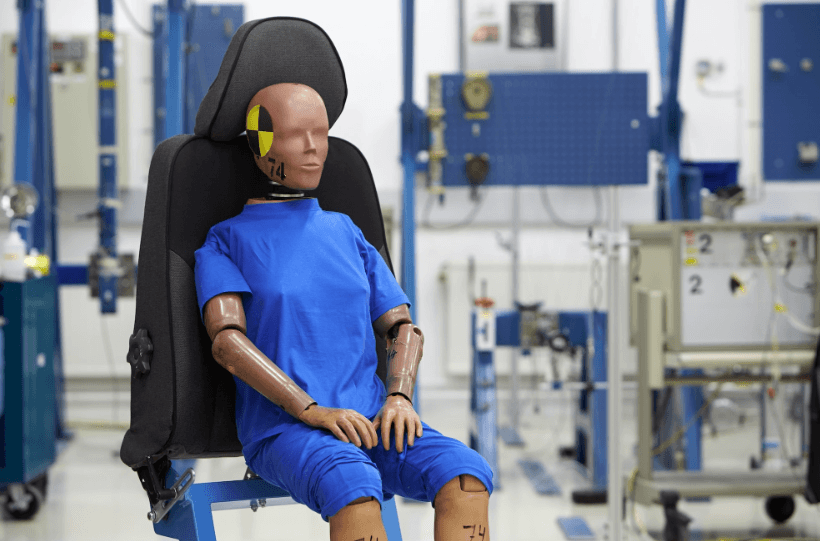
Automobile crash testing: Traditional crash testdummies replicate male body structures, resulting in a 73% higher severe injury rate for women in identical collisions. The US has now introduced specialized
test dummies modeled on female anatomy to recalibrate safety airbag and seatbelt parameters.
3. Inclusive Reconstruction: Universal Design and Design Justice
Industrial standardization was originally intended to cut costs and boost efficiency, yet
it has formed a rigid logic that prioritizes the majority and sacrifices minorities. The concepts of universal design and design justice drive industrial transformation, advocating that products should actively adapt to diverse groups rather than forcing marginalized users to compromise.
Digital accessibility practices: The W3C issued theWeb Content Accessibility Guidelines, while Apple and Microsoft optimized hardware adaptability. Google leverages AI and computer vision to build
accessible tools that assist people with speech impairments and visual impairments in using smart devices independently.
Overhaul of mandatory industry standards: The U.S. National Institutes of Health mandates diverse gender representation in medical research subjects; major automakers worldwide have updated crash test standards to eliminate design-based gender inequities at the source.
The paper concludes that technological products embody a society’s degree of inclusiveness. Abandoning single uniform standards and respecting diverse physical differences
represents not only advances in industrial and medical technology, but also profound humanistic care within society.
II. Personal Reflections
OnceI picked up a pair of left-handed scissors, and the experience felt extremely
awkward. At that moment, I suddenly realized that most daily objects in the
world are not tailored to my usage habits. The discomfort I felt for just a few
minutes is the lifelong daily struggle endured by left-handed people.
Virtually all foundational designs in society arestandardized for right-handed individuals: regular scissors, computer mice and keyboards, door opening directions, spiral-bound notebooks, and writing grooves on desks all fit right-handed movements. Growing up, left-handed people must constantly accommodate this set of established rules and adapt to reverse-designed tools, with trivial inconveniences permeating every aspect of study and life. As a right-handed person who has long belonged to the mainstream group, I effortlessly enjoy all the conveniences brought by standardized
design, completely unaware that I am a beneficiary of this biased system.
This trivial incident reshaped my understanding: such hidden disparities mirror the
hardships women face in society. I once naively believed that daily goods and
social environments had achieved full equality with all gaps eliminated.
Similarly, most men fail to notice that urban night travel norms, equipment
dimensions, medical trial data, and implicit workplace evaluation criteria are
all benchmarked against male bodies. Countless subtle constraints, forced
compromises and chronic physical drains are experiences men will never
comprehend, just as right-handed people cannot empathize with the persistent
struggles of left-handed individuals.
People in the mainstream rarely perceive systemic biases favoring themselves, and
often dismiss minorities’ complaints as overreactions. Left-handed scissors and otherspecialized adaptive products are scarce, overpriced and merely fragmented makeshift solutions that cannot offset the systemic bias embedded in all design frameworks. Likewise, sporadic preferential policies cannot erase subtle, pervasive inequities entrenched everywhere. Just like the bottle openers mentioned in the paper, which seemingly solve a daily trouble yet retain the flawed standardized logic of oversized grips and impose heavier physical loads on small-handed users; early automobile testing that relied on scaled-down male dummies instead of authentic female models also exemplifies this superficial
remedial mindset.
I once merely pitied left-handed people, but now I understand that shallow sympathy accomplishes nothing. Privilege is inherent and invisible, and those who occupy advantageous social positions rarely recognize their unearned benefits. True equality is not offering scattered compensation to disadvantaged groups, but integrating accommodation for diverse differences into the earliest stages of design and rulemaking. This aligns perfectly with the core philosophy of inclusive engineering: technology should not serve only the majority. Identifying the hardships of marginalized groups and remedying flawed design frameworks defines the true meaning of engineering.
No product in daily life can accommodate every person. For instance, ordinary printed books are inaccessible to the blind, and standard-sized scissors are unsuitable for children. For every object in the world, there exists a group denied its convenience—and this is precisely the purpose of engineering. Developingbraille translation devices and manufacturing child-sized scissors are meaningful pursuits. Engineering should never cater solely to the general public; it must actively bridge all kinds of usability gaps. Through design and technology that accommodate all groups, we can gradually break down the
barriers created by standardization and build a more inclusive and equitable world. As illustrated in the paper by Google’s accessibilityapplications, newly adopted female crash test dummies, and mandatory
regulations requiring female participants in medical research, truly inclusive technology ought to be a vessel that embraces everyone, rather than a sieve that excludes minorities.
Bibliography
Alshahrani, S. (2026). Correlation Between Left-Hand Dominance, Repetitive Manual Tool Usage and Carpal Tunnel Syndrome Prevalence. Saudi Journal of Medical and Biological Sciences.
https://pmc.ncbi.nlm.nih.gov/articles/PMC11364309/
Demiryurek, S. (2018). Occupational ergonomic risk of unilateral tool design for non-dominant hand users. International Journal of Occupational Medicine and Environmental Health.
Human Factors and Ergonomics Society. (2021). Standard consumer bottle cap torque specifications and grip strength gender discrepancy benchmark report.
Lee, S., et al. (2022). Sex Differences in Symptom Phenotypes Among Older Patients with Acute Myocardial Infarction. Journal of the American College of Cardiology.
https://pmc.ncbi.nlm.nih.gov/articles/PMC8901454/
National Highway Traffic Safety Administration. (2026).Report to Congress: Progress with THOR-05F Female Crash Test Dummy Deployment. U.S. Department of Transportation.
https://www.nhtsa.gov/sites/nhtsa.gov/files/2026-01/report-congress-2026-thor-05f-worldsid-05F-female-crash-safety.pdf
National Highway Traffic Safety Administration. (2023). GAO-23-105595: DOT Should Improve Crash Test Dummy Design to Address Female Occupant Injury Risk. U.S. Government Accountability Office.
National Institutes of Health. (1993). Inclusion of womenand minorities in clinical research (42 U.S.C. § 289a-2). U.S. Federal Statute.https://uscode.house.gov/view.xhtml?req=(title:42%20section:289a-2%20edition:prelim)
National Institutes of Health. (2025). Inclusion of Womenand Members of Racial and/or Ethnic Minority Groups in Clinical Research (NOT-OD-25-131). NIH Grants Policy.
https://www.grants.nih.gov/grants/guide/notice-files/NOT-OD-25-131.html
Oliver-Williams, C. (2025). Women Are 50% More Likely to Be Misdiagnosed for Heart Attacks: Causes, Consequences, and Solutions. Cardiovascular Diabetology.
University of New South Wales. (2022). Gender disparity inadverse drug reaction incidence across global prescription medicines. eClinicalMedicine (The Lancet).
World Wide Web Consortium. (2008). Web Content Accessibility Guidelines (WCAG) 2.0. Official W3C Recommendation.
https://www.w3.org/WAI/WCAG20/versions/guidelines/wcag20-guidelines-20081211-letter.pdf
World Wide Web Consortium. (2025). WCAG 2.2 formally approved as ISO/IEC 40500 international standard.