

Introduction

In nearly every modern institution—whether a corporate firm or auniversity admissions board—the language of diversity prevails. It is celebrated, advertised, and increasingly expected. According to a 2020 Harvard Business Review article, companieswith diverse teams tend to outperform their peers in profitability and innovation.1 Diversity, then, is framed as both a moral good and a practical
strategy.
But should we accept this framing at face value? The modern embrace ofdiversity can often feel like a performance. Companies fly rainbow flags during Pride Month, yet rarely confront deeper systemic issues. Schools celebrate “representation” while curricula remain unchanged. As such, we must ask: is diversity truly valuable, or is it merely fashionable?
This essay argues that diversity is not inherently valuable. Itacquires worth only when it drives meaningful structural, intellectual, or ethical transformation. To explore this, we will consider diversity’s role in business, its treatment in political philosophy, and its potential distortion by identity politics.
What Does Diversity Actually Mean?
Though often used with confidence, “diversity” is surprisinglyambiguous. Typically, it refers to visible social categories like race, gender, or ethnicity—traits that are easy to count and publicize. However, some scholars propose a deeper framework. Scott E. Page, for example, distinguishes between “surface-level diversity” (demographics) and “deep-level diversity,” which encompasses differences in thinking styles, heuristics, values, and problem-solving approaches.2
This distinction matters. A boardroom filled with racially diverseindividuals who all went to the same elite universities and share similar ideological assumptions may still lack true diversity in thought. In contrast, a team with differing worldviews, professional experiences, or moral frameworks may offer a richer, more innovative environment.
Similarly, the word “value” itself needs unpacking. Some supportdiversity because it brings functional benefits—better decisions, improved profits, stronger teams. Others support it on moral grounds, viewing it as a form of justice or redress for past wrongs. These goals often overlap, but not always. A policy designed to increase demographic representation might satisfy public expectations yet fail to improve institutional integrity or public trust.
Therefore, the more useful question is not whether diversity is valuable, but which forms of diversityare valuable, under what conditions, and by what criteria.
Diversity as a Business Asset
In recent years, corporate diversity has moved from ethical gesture tobusiness imperative. Numerous reports claim that diverse teams make better decisions and generate higher returns. One widely cited McKinsey study found that companies in the top quartile for gender and racial diversity were more
likely to outperform competitors financially.3 In another study, Harvard Business Review noted that diverseteams are more objective, more willing to challenge assumptions, and ultimately more effective.4
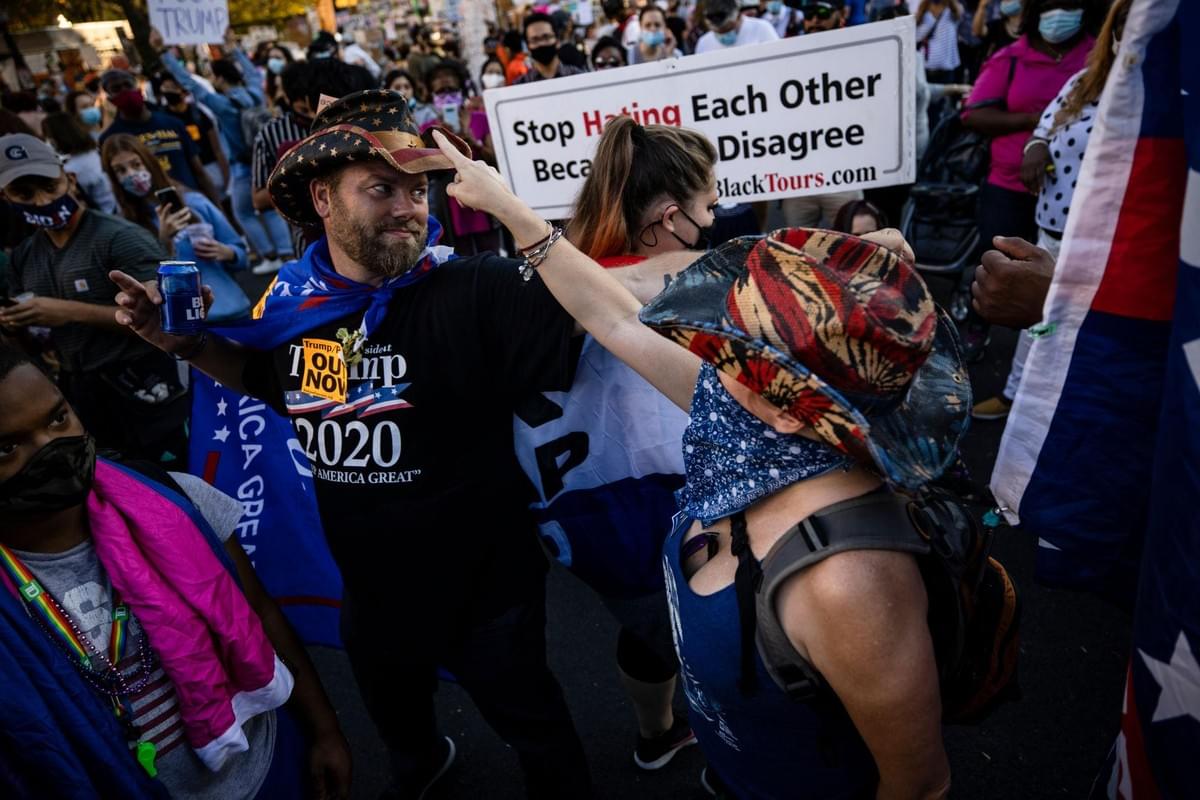
Yet this instrumental framing has limitations. It encourages a checkboxmentality—one that risks turning diversity into a commodity. Many companies now implement Diversity, Equity, and Inclusion (DEI) programs not from genuine conviction, but to satisfy ESG standards or appeal to a socially conscious market.5 In such cases, diversity becomes part of brand management rather than institutional transformation.
This can lead to a kind of corporate hypocrisy. The same systems thatpreviously resisted inclusion now adopt it as a marketing strategy. A company might appoint a visibly diverse board while preserving a deeply homogeneous culture beneath the surface. In these cases, diversity becomes performative—a symbol, not a solution.
This raises a difficult question: if diversity is pursued only becauseit is profitable, is it still diversity in the ethical sense? Or does this instrumental approach ultimately reinforce the very hierarchies it claims to subvert?
Moral Arguments from Political Philosophy
Beyond utility, many defend diversity as a matter of justice.Philosophers like John Rawls have argued that fairness in a just society requires more than equal opportunity; it demands structural adjustments to compensate for unequal starting positions.6 Affirmative action and representational diversity are often justified on these grounds.
However, this view is not uncontested. Libertarian thinkers such asRobert Nozick reject redistributive policies, arguing that they violate individual autonomy and treat people as mere instruments of collective goals.7 Even those sympathetic to justice-based arguments—like Michael Sandel—warn that
overemphasizing identity can obscure deeper moral and institutional concerns. In some cases, policies meant to expand inclusion may generate resentment, intensify group boundaries, or diminish the legitimacy of those who benefit from them.8
This suggests a paradox: attempts to increase fairness throughdiversity may unintentionally undermine social trust and cohesion. Representation, when overemphasized, can become reductionist—flattening
individuals into avatars of their group, rather than recognizing them as whole persons.
To avoid this, the moral case for diversity must strike a balance:recognizing historical exclusion without reducing justice to symbolism.
When Diversity Becomes Division
Sometimes, diversity starts as a well-meaning moral project and ends asdivisive identity politics. Initially, identity-based movements gave voice to groups historically excluded from political discourse. But, as political theorist Francis Fukuyama notes, these movements can slide into what he calls
the “logic of resentment,” where legitimacy derives from grievance rather than reason or shared ideals.9
In such cases, diversity no longer connects people—it separates them.Public discourse becomes fragmented, as different identity groups demand recognition without seeking reconciliation. Mark Lilla describes this phenomenon as the “narcissism of small differences,” where politics becomes a
contest of symbolic representation, rather than a forum for collective reasoning.10
This dynamic can have unintended consequences. As group identitybecomes the primary unit of moral analysis, individual agency fades into the background. Institutions start to treat people not as thinkers, workers, or citizens, but as spokespeople for a racial, gendered, or cultural group. While
this may increase visibility, it also reduces complexity. Worse still, it can cast doubt on the legitimacy of diverse leaders, implying they were chosen for their identity rather than their merit. Thus, when diversity is disconnected from shared civicvalues, it risks becoming a new form of division rather than a remedy for past exclusions.
Conclusion: Recovering the Substance Behind the Symbol
Diversity has come to symbolize progress, fairness, and inclusivity.But as this essay has argued, its value is not automatic. Diversity becomes meaningful only when it leads to deeper institutional reform, richer
intellectual engagement, and more humane forms of community.
To recover that value, we must resist the urge to treat diversity as aslogan or a statistic. True diversity requires going beyond surface traits to embrace differences in thought, perspective, and moral commitment. It also demands an honest reckoning with the structures that shape exclusion and
inequality.
Importantly, we must distinguish between means and ends. Diversity isnot itself the final goal—it is a path toward more inclusive, thoughtful, and just institutions. Achieving that requires rejecting tokenism, fostering dialogue across ideological divides, and defending individual dignity alongside group recognition.
In a time when division is often disguised as empowerment, ourchallenge is not to abandon diversity, but to ground it in shared principles, critical reflection, and civic humility. Only then can diversity become more than a fashionable ideal—and instead become a force for genuine human flourishing.
Works Cited
1. David Rock and Heidi Grant, “Why Diverse Teams Are Smarter,” Harvard Business Review, November 4, 2016, https://hbr.org/2016/11/why-diverse-teams-are-smarter.
2. Scott E. Page, The Diversity Bonus: How Great Teams Pay Off in the Knowledge Economy (Princeton: Princeton University Press, 2017), 8–12.
3. Vivian Hunt, Lareina Yee, Sara Prince, and Sundiatu Dixon-Fyle, Diversity Wins: How Inclusion Matters (McKinsey & Company, 2020), https://www.mckinsey.com/featured-insights/diversity-and-inclusion/diversity-wins-how-inclusion-matters.
4. Rock and Grant, “Why Diverse Teams Are Smarter.”
5. Frank Dobbin and Alexandra Kalev, “Why Diversity Programs Fail,” Harvard Business Review, July-August 2016.
6. John Rawls, A Theory of Justice (Cambridge, MA: Harvard University Press, 1971), 52–56.
7. Robert Nozick, Anarchy, State, and Utopia (New York: Basic Books, 1974), 160–164.
8. Michael Sandel, The Tyranny of Merit: What’s Become of the Common Good? (New York: Farrar, Straus and Giroux, 2020), 67–73.
9. Francis Fukuyama, Identity: The Demand for Dignity and the Politics of Resentment (New York: Farrar, Straus and Giroux, 2018), 7–10.
10. Mark Lilla, The Once and Future Liberal: After Identity Politics (New York: HarperCollins, 2017), 30–34.